
Inside the Ohio Court System
Ohio runs its courts in three broad tiers. Local trial courts sit at the bottom. Twelve appellate districts come next, then the Supreme Court of Ohio. Every county has its own Court of Common Pleas. It splits into General, Domestic Relations, Juvenile, and Probate divisions. Probate stands apart with its own judge and its own records. Municipal and County Courts take on traffic cases and misdemeanors, plus preliminary felony hearings and smaller civil claims. When a case qualifies for appeal, the Court of Appeals district covering the filing county hears it. The Court of Claims is different. It is a statewide trial court for claims within its jurisdiction, not a doorway into county dockets. Before any docket search, check the Ohio trial-court directory, which lists each local court and its contact details.
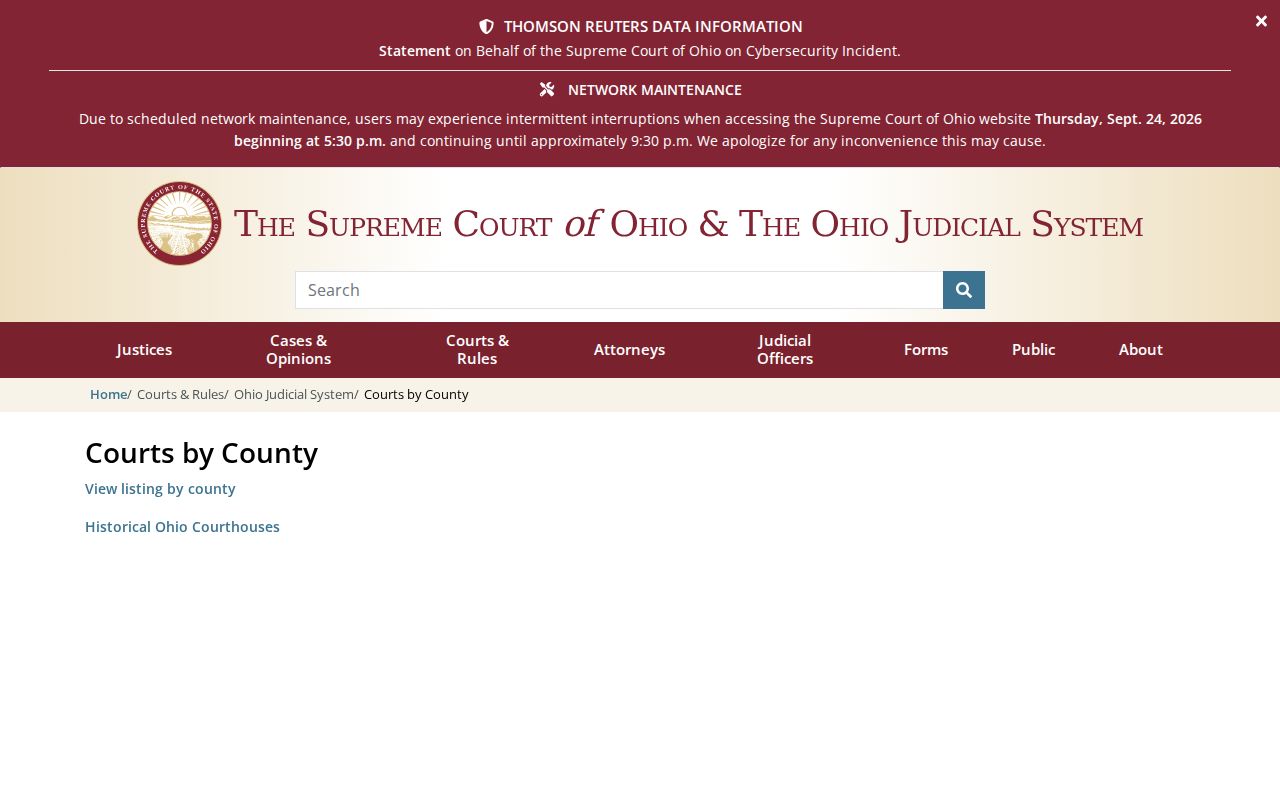
Why does the name matter so much? The docket and its clerk belong to the named court, even when two courts share a building or one local website.
| Ohio court level | Typical docket work | Where the record sits |
|---|---|---|
| Common Pleas | Felonies and broad civil matters; Domestic Relations, Juvenile, and Probate functions have distinct Ohio case types. | County Clerk of Courts or the division’s separate Ohio clerk or court records office. |
| Municipal Court | Traffic, misdemeanors, preliminary felony proceedings, and limited civil matters in Ohio. | That Ohio Municipal Court’s clerk and local search system. |
| County Court | Similar limited criminal, traffic, and civil matters in Ohio areas not served by a Municipal Court. | The Ohio County Court clerk. |
| Court of Appeals | Review of eligible Ohio trial-court judgments and certain administrative matters. | The Ohio appellate district clerk’s separate docket. |
| Supreme Court of Ohio | Cases accepted by the state’s highest court and matters within its original jurisdiction. | The Supreme Court Clerk’s own docket. |
| Court of Claims | Specified claims against Ohio and state agencies, plus matters assigned by law. | The Court of Claims Clerk and its statewide portal. |
Ohio's 12 Appeals Districts Keep Separate Dockets
Ohio groups its 88 counties into 12 Courts of Appeals districts. An appeal lands in the district that serves the county where the trial case was heard. From there, that appellate court keeps its own docket. It is not a second view of the trial record. An appeal gets a fresh case number. It also has its own filings and orders, and its own schedule. To see which district serves a given county, check the Supreme Court's Courts of Appeals directory. It lists every county by district.
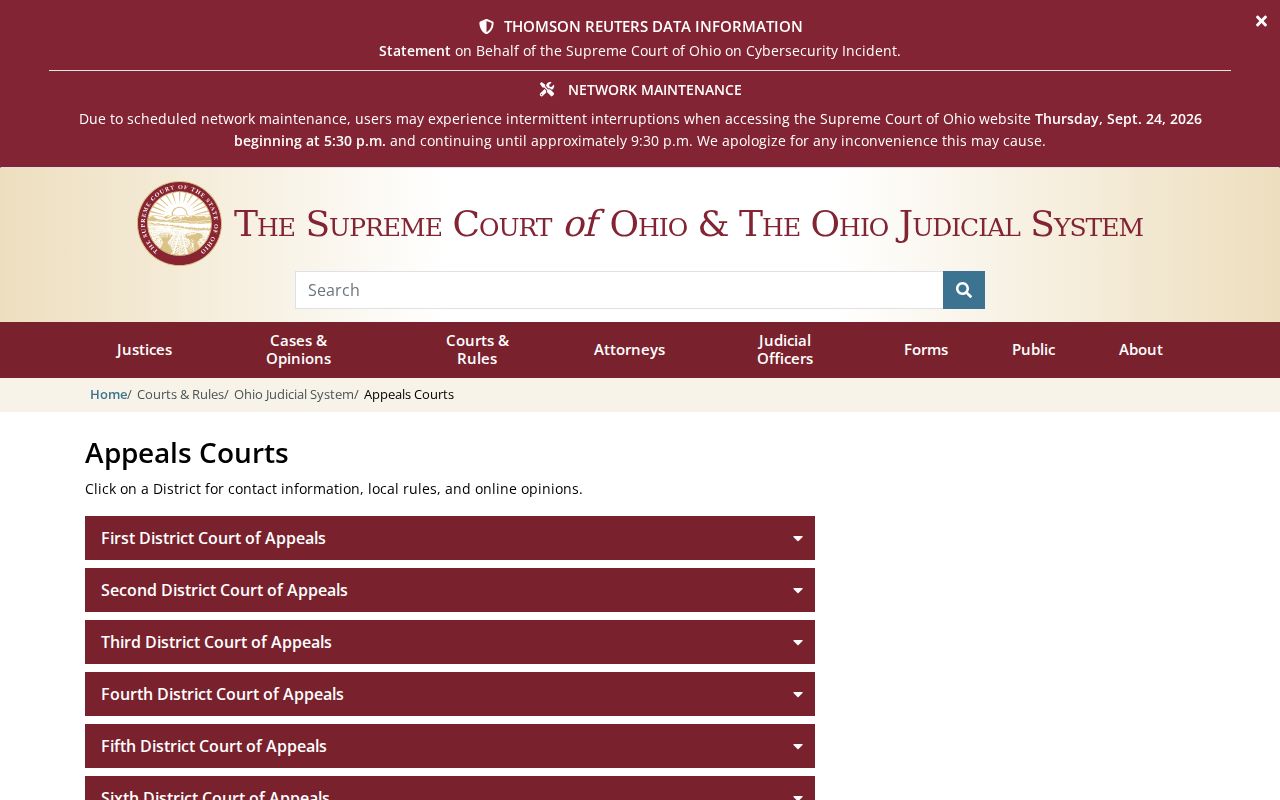
A complete Ohio case lookup therefore means searching twice. Look in the trial court for the notice of appeal or the record-transmission entry. Then check the district court for the appellate filings. If the case climbs higher, the Supreme Court layer appears in ECMS. It shows up only once that Court has opened a case. Three clerks, three search sites, and no single combined Ohio case page tie them together.
Note: A trial docket, an appellate docket, and a later Supreme Court docket are separate court records. Each has its own custodian.
The Ohio Statewide Search Portal
Ohio has no single public portal for ordinary county trial dockets. Every statewide option is bounded by the court that runs it. Common Pleas, Municipal, County, and Probate trial records have no shared route. The county portal is the normal one for those. Ohio eStats is statewide, but it reports totals, not case details. The case lookup instructions walk through matching a search to the court. Match it to the court named on the paper.
| System | What it covers | What it does not replace |
|---|---|---|
| Supreme Court ECMS | Cases before the Supreme Court of Ohio. | County trial dockets or every Court of Appeals case. |
| Court of Claims Odyssey | Case and hearing searches for the statewide Court of Claims. | Common Pleas, Municipal, County, or Probate dockets. |
| Local clerk and court portals | Case information published by a particular court, county, or division. | One search across all 88 counties. |
| Ohio eStats | Aggregate filings, terminations, pending matters, and time measures. | Names, individual case numbers, or docket entries. |
This is not a small coverage gap. Ohio's statewide systems each serve their own purpose, while the trial docket lives with the court that received the case.
Ohio Supreme Court Case Search Scope
One real statewide exception exists: the Supreme Court of Ohio's ECMS search. It covers matters before that Court. The search form takes a case number, a caption, a party's first or last name, or an entity name. An advanced attorney search is there too. Results sort and page through columns. The columns cover case number, caption, filing date, status, case type, and prior jurisdiction. Open a case and you get tabs for Docket Items, Parties, Decisions, and Issues Accepted. One thing you will not find is a county or trial-court dropdown. The ECMS public search shows the Supreme Court docket interface itself.
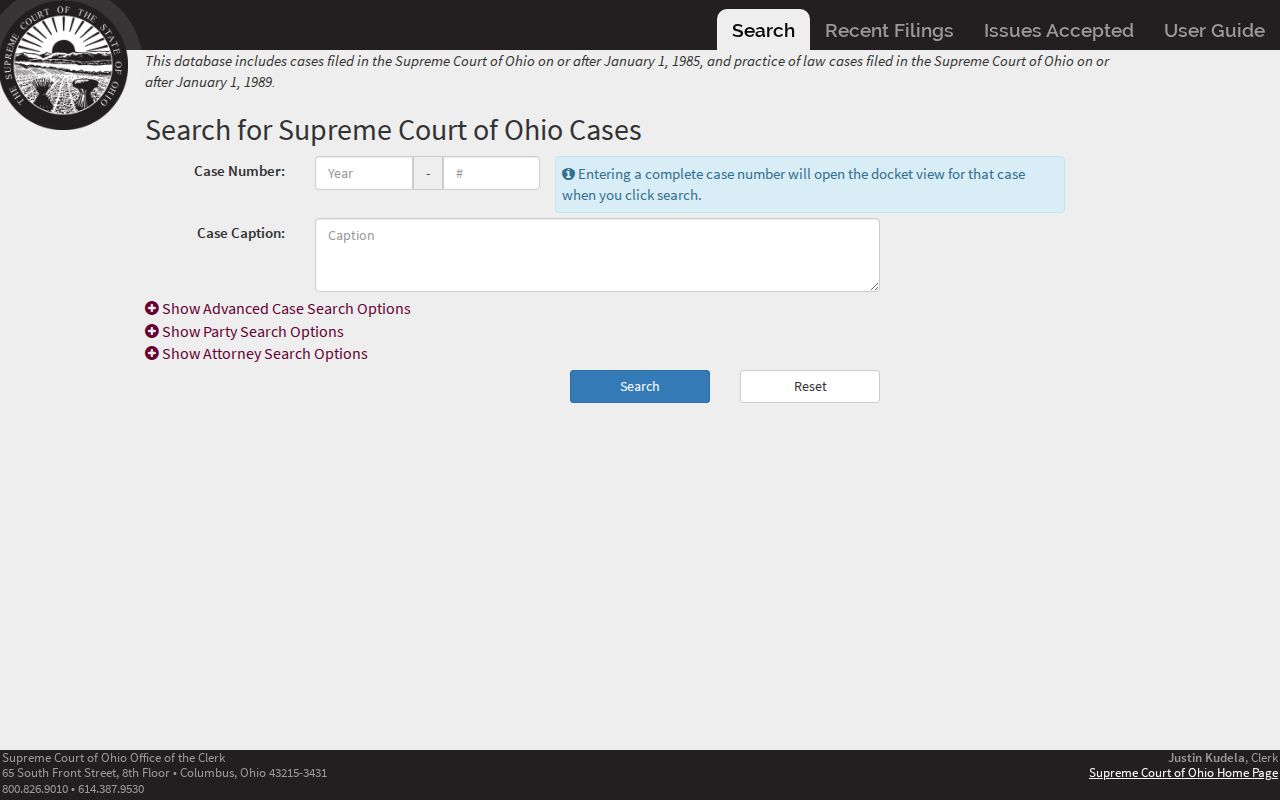
Two more public views exist alongside the case search. The ECMS User Guide describes recent filings and issues accepted as separate listings. Know the limits. A case in a Court of Appeals district is not automatically a Supreme Court case, and the guide does not promise a free document image behind every docket item. The Court's filing service and its public search are separate functions.
How Ohio Dockets Reach the State Index
For ordinary trial cases, Ohio publishes no statewide index of county docket entries. The Ohio case file starts at the court that receives it. That court's clerk or local case-management system records the filings, settings, and orders. A local public portal may put some of that history online. Trial courts do report workload statistics to the Supreme Court, but that reporting sends no public case-level record into ECMS.
Ohio docket path: County filing → local court and clerk docket → local public search, if offered; separate workload reporting → Ohio eStats aggregate totals.
No statewide technical spec creates one nightly or real-time feed from county systems. Local e-filing, internal case management, public docket access, and state statistics are related layers. But they stay separate. A docket line can show up locally with no document image attached. The state's aggregate report will never name the parties or list the event history.
Note: Ohio's statewide reporting path measures court work. It does not create a shared trial-case search.
Ohio eStats Counts Work, Not Case Dockets
Think of Ohio eStats as a scoreboard, not a docket. The Supreme Court's Office of Court Services runs it through the Case Management Section, which also publishes reports, forms, time standards, and data resources for Ohio courts. The dashboard tracks filings, terminations, pending matters, clearance, and time to disposition. You can slice the numbers by court, jurisdiction, or judge. Newer views add county and case-type filters too. None of that gets you a party name or a docket event.
That is by design. It measures court workload, and it does that job well. The Ohio eStats dashboard puts the aggregate numbers in public view, and the Supreme Court's Case Management Section page explains the reporting resources behind them.
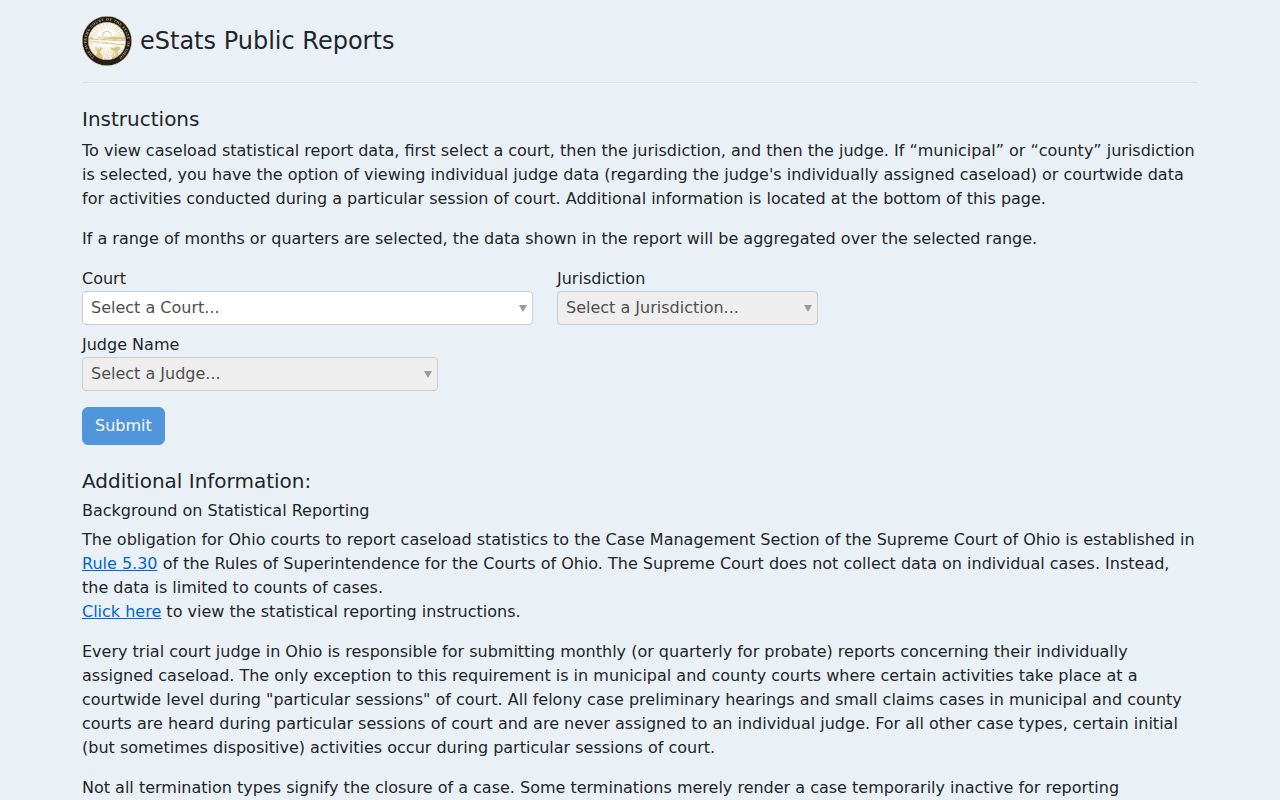
A dashboard is the wrong tool for case facts. It cannot confirm a hearing date, prove a case was filed, or quote an order. Two cautions on the numbers themselves. Current-year counts can be incomplete. Pending matters are snapshots. Do not add them up month by month as if they were new cases.
Note: A high filing total describes a court's workload. It does not identify any single case inside that total.
E-Filing Through Local Ohio Court Systems
Ohio trial courts e-file locally. There is no single statewide engine for the county courts. Instead, three statutes give clerks the option: R.C. 2303.081 for Common Pleas, R.C. 1901.313 for Ohio Municipal Courts, and R.C. 1907.202 for Ohio County Courts. Each lets the local clerk or court accept filings by email or through an online platform. The statutes cap e-filing fees at the paper filing fee under the relevant provisions. Vendors and payment setups stay local.
One more distinction matters. E-filing is for submitting documents. It is not automatically the public docket search. The Supreme Court e-Filing page illustrates the gap, since it covers Supreme Court cases rather than filings across the county trial-court network.
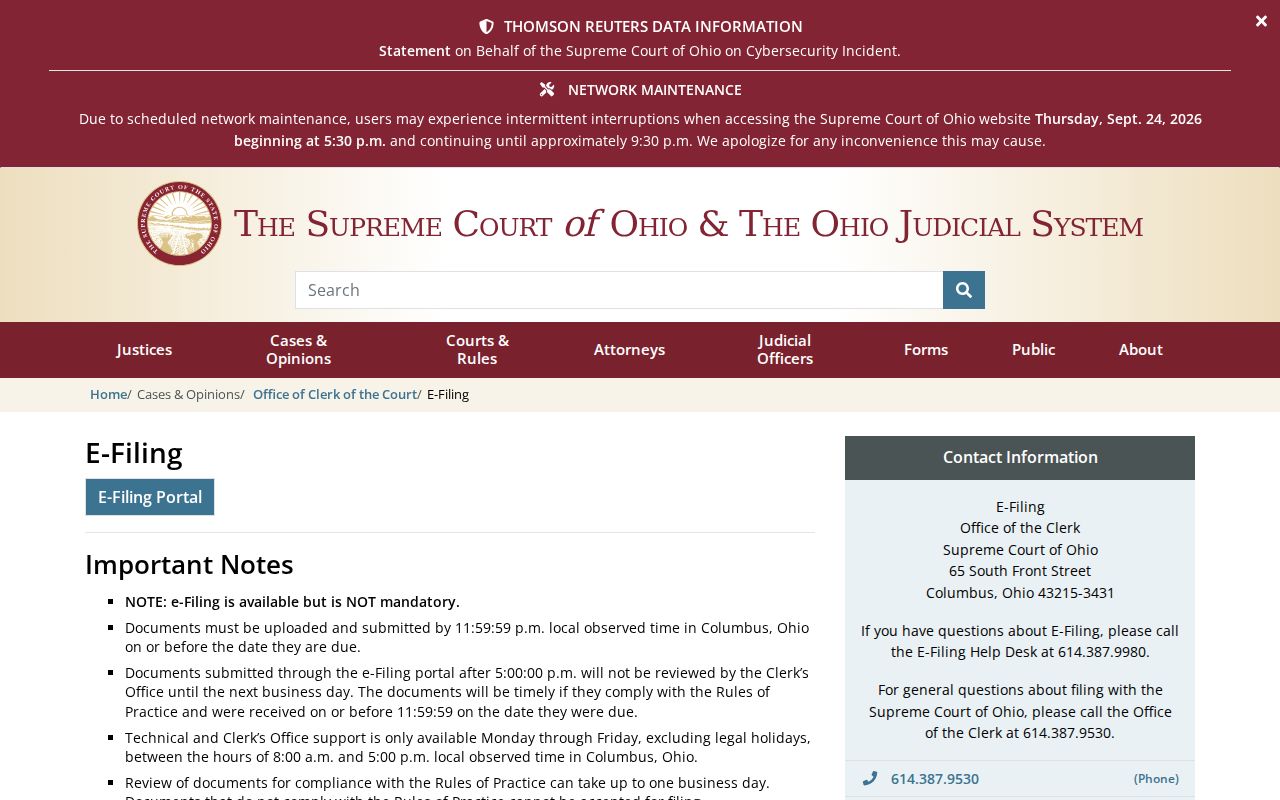
The Court of Claims runs its own service, Odyssey eFileOH, which is separate from everything above. Local Ohio trial courts pick their own platforms and post their own instructions. Before you submit anything, confirm the court, the document type, the account rules, and any charge on that court's official site.
Ohio's New Court-Access Rules Have Prospective Dates
Ohio's newer online access rules apply only to defined groups of newer cases. They do not build a statewide trial portal. Nor do they put every historical file on the web. Under R.C. 2303.12, Common Pleas clerks must give website access to general dockets and case documents. That covers covered civil cases filed from April 6, 2023. Criminal cases follow later. The requirement hits cases filed after September 30, 2025, with an 18-month implementation period. Domestic Relations and Juvenile files are excluded from that website mandate.
Probate runs on its own clock. R.C. 2101.11 covers Ohio Probate cases filed on or after September 30, 2025. It also carries an 18-month implementation period. In both settings the duty sits with the local clerk's website. Older cases still depend on local digitization or a trip to the clerk. The timeline is not a promise of matching portals, documents, or archives across every Ohio court.
Ohio Portal vs County Docket
Statewide services and county dockets answer different questions. ECMS searches the Supreme Court's own matters. Court of Claims Odyssey covers that court's caseload. eStats aggregates reporting numbers. The full Ohio trial docket still lives with the court and clerk that hold the case, so a reader who needs the filing history, a local order, or a certified copy should move from the state-level tool to the responsible local clerk.
| Need | Statewide service | County or court clerk |
|---|---|---|
| Find an Ohio case | ECMS or Odyssey only when the matter belongs to that court. | Local portal for the court and division named on the paper. |
| Read a trial docket | No common state-level index for ordinary county cases. | Local docket or case history, subject to that portal’s coverage. |
| View a filed document | Only files exposed by the relevant statewide court portal. | Local document portal or request through the custodian clerk. |
| Obtain certification | Online viewing does not itself certify a record. | Request a certified copy from the clerk who holds the original. |
| Review caseload trends | eStats shows aggregate court measures. | Individual docket entries stay in the case file. |
Start by picking the right county court through the Ohio county directory. An appellate case goes to the district clerk instead. Matters before the Supreme Court or the Court of Claims follow each court's separate route. Note: Ohio has statewide court services. But there is no statewide public search that replaces every county trial docket.
Ohio Court of Claims Odyssey Case Search
The Ohio Court of Claims is a statewide forum. Its Odyssey portal searches cases across its own jurisdiction. It does not reach the county trial-court system. Public Smart Search takes a case number or party name with no registration required. Registered attorneys and authorized users get elevated access. Advanced filters narrow things by case type or date. A Court of Claims case number may carry a suffix like JD, AD, VI, or another court-specific code. That format is a Court of Claims convention, not an Ohio county case-number rule.
The Odyssey Portal sorts results into Case Information, Party, Causes, Disposition Events, Events and Hearings, Financial, and Documents. Two limits to know. The search guide caps visible results at the first 200. A broad party query may need a date or case-type filter. The Court's notice says portal entries match its official docket. But portal documents are not the certified official record. Confidential or sealed items may be hidden, and the public search is not meant for bulk downloads.
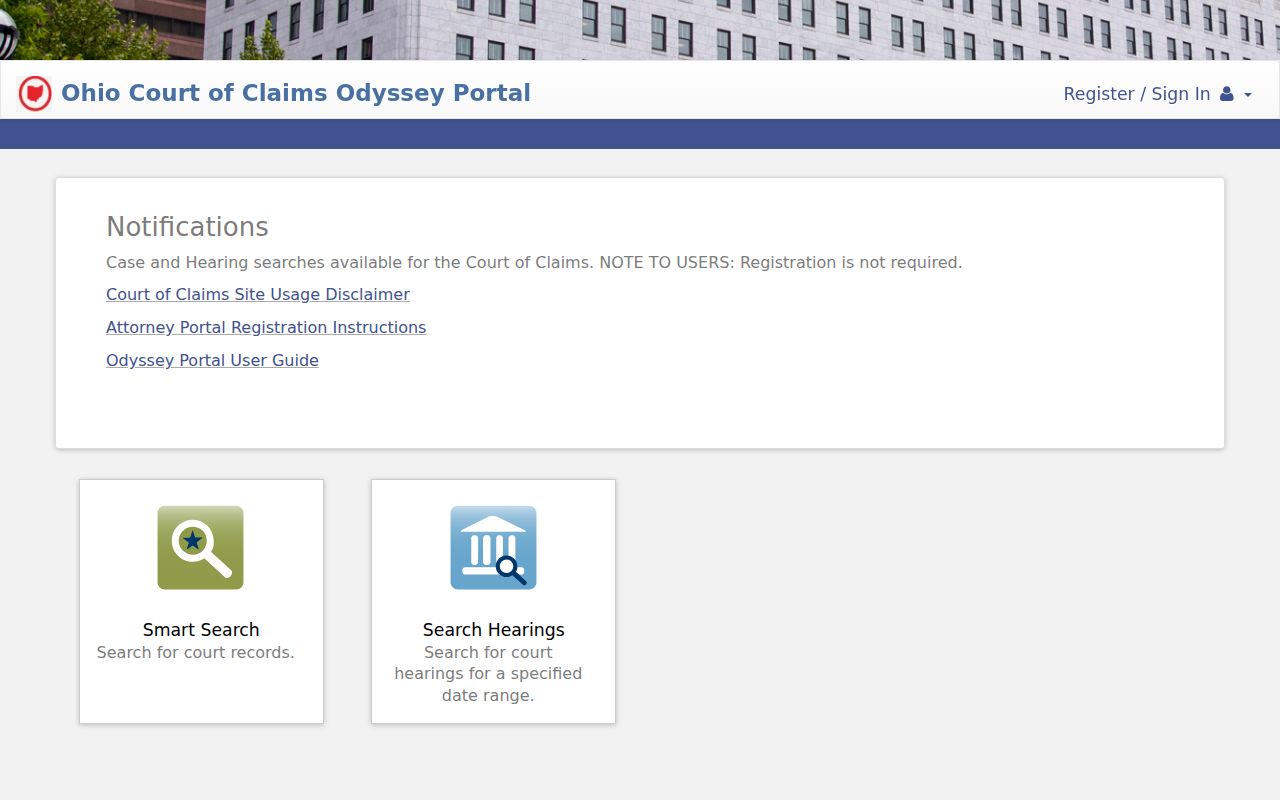
Need a certified copy of a Court of Claims case? Order it from that court's Clerk in Columbus. Odyssey's statewide reach reflects one court's jurisdiction, not an all-county docket search.
Ohio Court of Claims Calendar Search
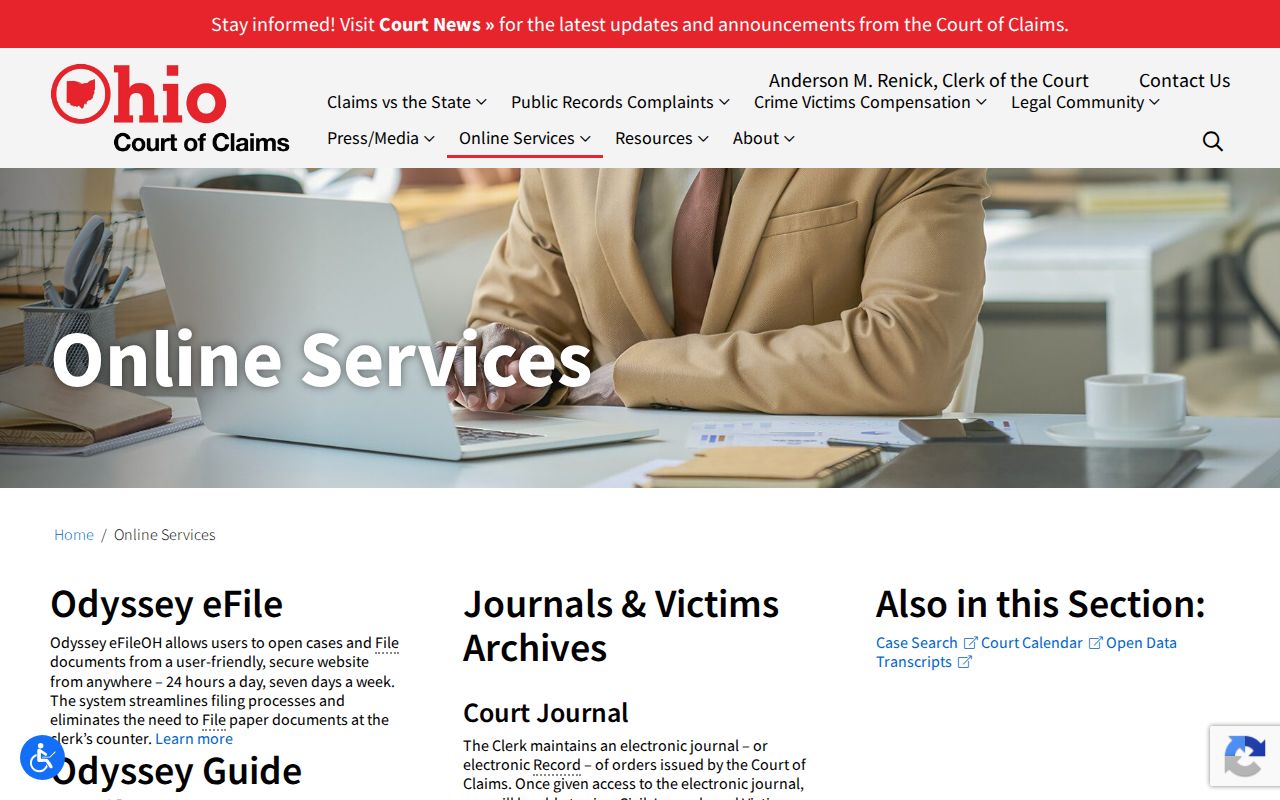
Ohio keeps its Court of Claims tools on a single Online Services hub. There you'll find separate Case Search and Court Calendar options. Odyssey eFileOH, Guide & File, electronic journals, transcripts, and victims' decision archives sit there too. Each tool does its own job. A filing tool, a case lookup, and a calendar view answer different questions. One statewide court sits behind them all.
The public calendar is the right spot for Ohio Court of Claims hearing information. Just don't expect a county-by-county trial calendar there. The Court's Online Services page lays out each distinct case and calendar route.
The Court of Claims also publishes calendar data apart from its county-level trial court systems.
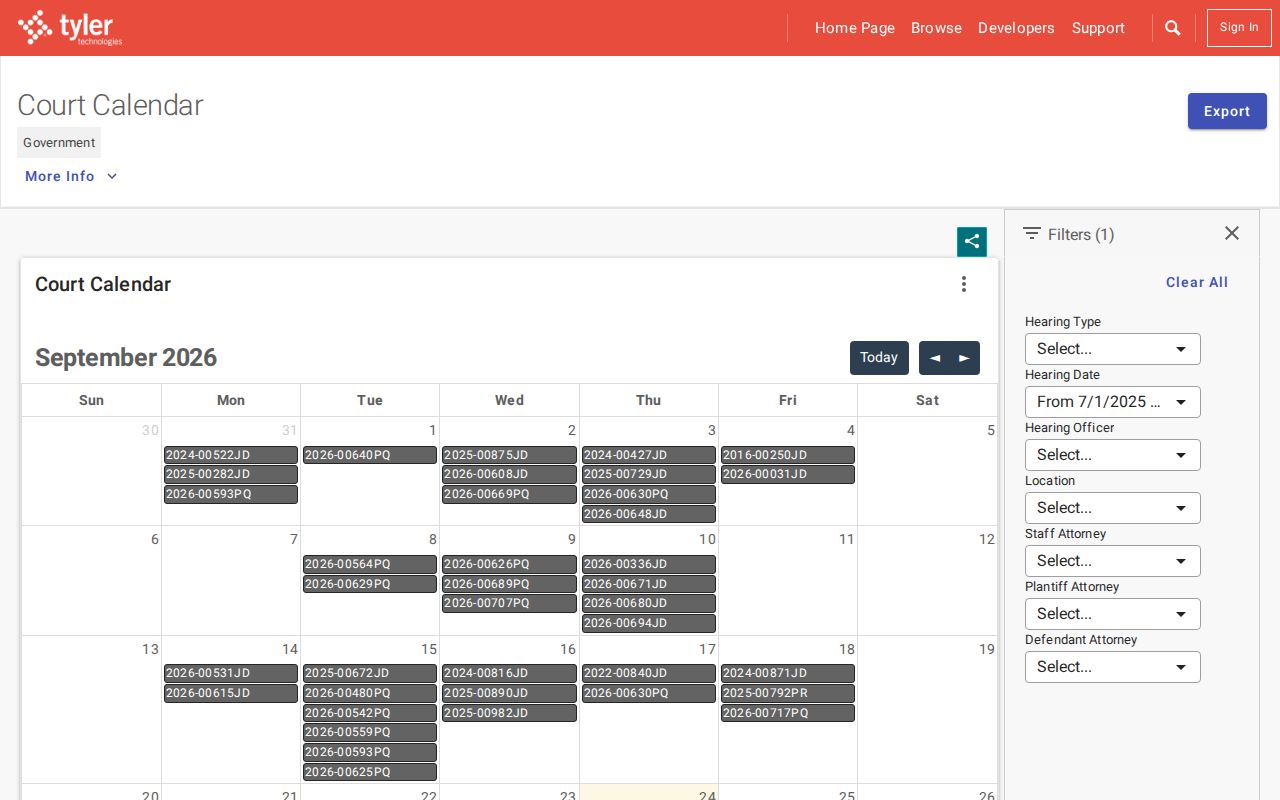
For a Court of Claims matter, those separate calendar and case-search links will carry you far. A local trial hearing is different. It still turns on the local court's own calendar or clerk.
Ohio Court Technology and History
Trial-level court technology in Ohio is decentralized. There is no common statewide launch date. No single vendor migration exists, and no shared county schedule covers public trial-court search. Local courts pick their own case-management, e-filing, and public-access platforms. Statewide administration sets the rules and collects the reports. Ohio's local clerks keep the case files and decide how the public reaches them. Older cases may still live in paper docket books, microfilm, or local archives.
Recent milestones point toward reporting and future online access, not one shared search engine. Revised Supreme Court dashboards were announced in February 2026. They added county and case-type filters plus new time-standard views. Updated case time standards took effect at the start of 2026. The online docket duties for Common Pleas and Probate use separate filing-date thresholds. Local implementation periods differ too. None of this stitches every county docket into one public statewide case index.
So work from the ground up. Identify the Ohio court. Follow its local clerk or court page for the case number and docket entries. Reach for a statewide service only when the case belongs to the Supreme Court or the Court of Claims. Aggregate statistics are the other reason to go statewide.